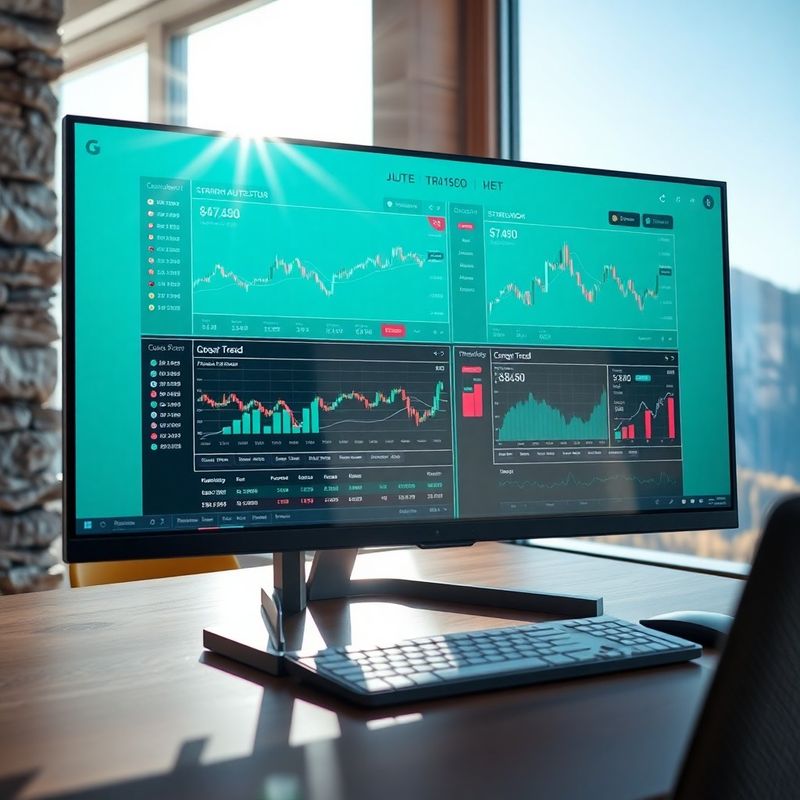
From signal generation to settlement reconciliation, the terminal handles each step without gaps.
Holloway House was designed around one observation: most automated trading tools cover order placement but ignore everything that surrounds it — pre-trade risk checks, mid-trade monitoring, and post-trade reporting. The terminal's five integrated modules close that gap. Live market data feeds inform the strategy engine. The strategy engine submits orders with configurable retry and slippage logic. The risk layer watches every position in real time and acts on configured thresholds faster than any manual process could. Portfolio tracking consolidates the outcome. Backtesting lets you stress-test the entire loop against historical conditions before risking real capital. Every module shares a common data layer, which means there are no synchronisation delays or data-model mismatches between components.
Feature Details Worth Knowing Before You Subscribe
Specifics matter more than marketing language — here is what each module delivers in practice.
Multi-Exchange Data Feeds
Connect to equity, FX, and crypto venues simultaneously. The normalised data layer translates tick formats into a unified schema, so your strategy logic reads the same structure regardless of which exchange or broker is the source. Reconnection and gap-fill logic is handled automatically.
Visual Rule Builder & Scripting API
Non-programmers can construct multi-condition strategies using the drag-and-drop rule builder. Advanced users access the Python-compatible scripting API to express complex signal logic, custom indicators, and cross-asset dependencies. Both interfaces compile to the same execution engine.
Layered Risk Engine
Configure risk limits at the strategy, portfolio, and account level. The engine evaluates all three layers on every fill event and order update. When a breach is detected, it cancels pending orders, closes or hedges open positions according to your defined response protocol, and notifies you via email and in-app alert.
Unified Portfolio Dashboard
One screen shows every position, unrealised P&L, asset-class exposure, and margin utilisation across all connected brokers. Custom views and filters let you focus on specific books or strategies. All data is exportable to CSV for reconciliation with external accounting or reporting tools.
Tick-Level Backtesting
The backtesting engine replays historical market microstructure — including bid/ask spread, volume, and order-book depth — to simulate realistic fill conditions. Reports cover equity curve, maximum drawdown by period, win/loss ratio, and Sharpe and Sortino ratios. Tests run in the cloud; results download as PDF or interactive HTML.
Monitoring & Alerting
The terminal monitors active strategies 24 hours a day, 5 days a week, and sends structured alerts when a strategy diverges from expected behaviour — whether that is an unusual fill rate, a data-feed interruption, or an approaching risk threshold. Alert channels include email, webhook, and Slack integration.
What the Terminal Does Not Do — and Why That Matters
Knowing the scope limits helps you plan integration and set realistic operational expectations.
Holloway House is a strategy-execution and risk-management tool. It does not provide investment advice, generate trade ideas, or predict market direction. The platform executes the logic you define and enforces the limits you set — results depend directly on the quality of the strategy you bring to it. The terminal does not currently support direct DMA access to EU regulated venues that require a licensed intermediary; connectivity runs through your existing broker's API. It also does not provide tax reporting or regulatory filing services. For those requirements, the CSV export is designed to feed into specialist accounting software.
“The backtesting engine was the deciding factor for us. We ran eighteen months of historical FX data through it in under four minutes and got a report detailed enough to present to our risk committee. That credibility would have taken our team days to produce manually.”
Anja Novak, Portfolio Analyst, Maribor
Ready to Move from Theory to Automated Execution?
Explore the pricing plans or contact our Novo Mesto team to discuss integration with your current broker setup.